
Short answer: you probably don't owe income tax, but you likely still have to file. These are two different questions, and mixing them up is what gets foreign-owned LLCs hit with a $25,000 IRS penalty.
Owing tax vs. having a filing requirement
Owing US income tax depends on whether your LLC has "effectively connected income" (ECI) — income connected to an actual US trade or business. If you're a non-US person running your business from outside the US, with no US employees, office, or dependent agent, you typically have no ECI and owe no US income tax, even if the LLC has revenue.
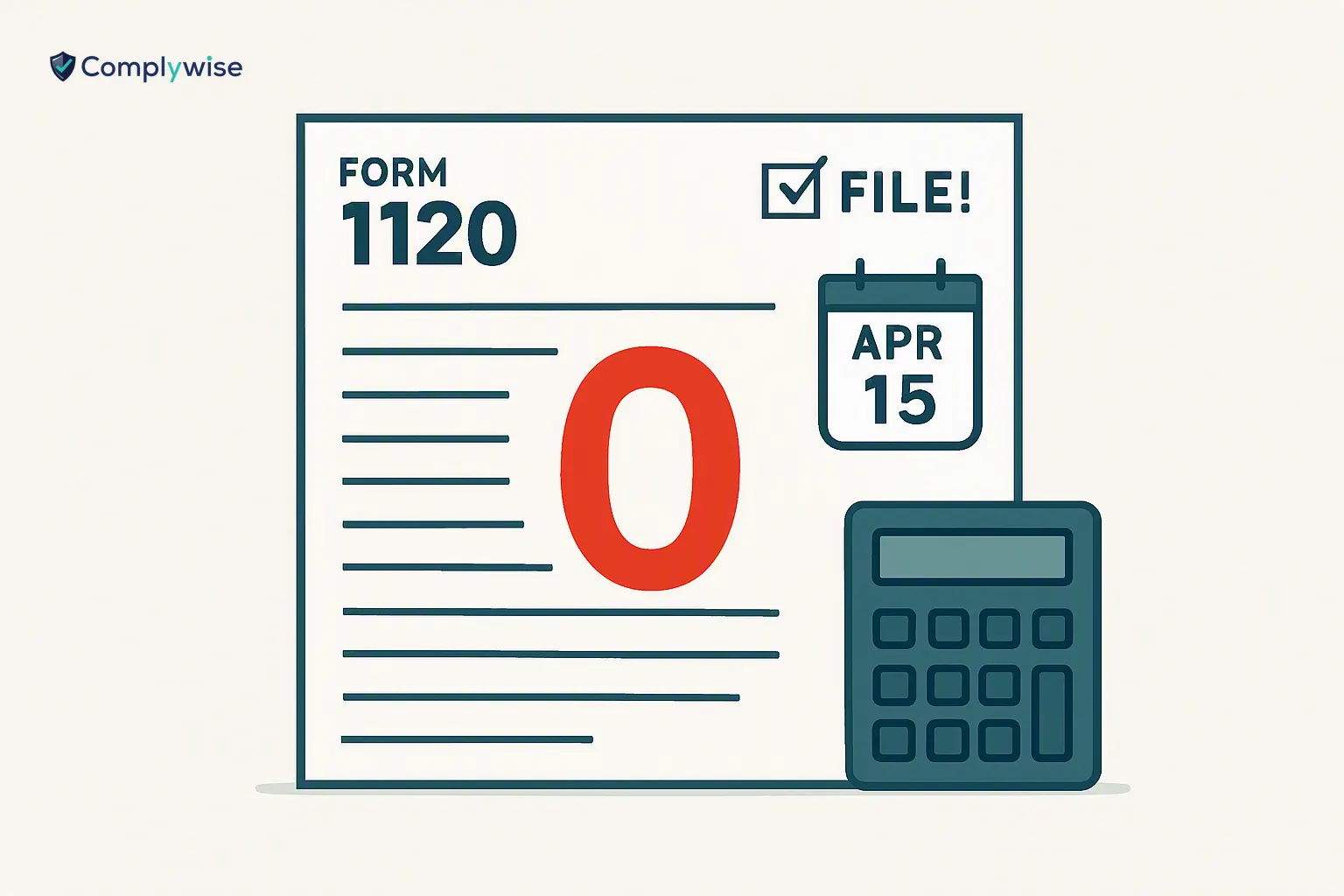
Having a filing requirement is a completely different trigger. If your LLC is a foreign-owned, single-member "disregarded entity," you must file Form 5472 together with a pro-forma Form 1120 if there was any reportable transaction between you and the LLC during the year — this includes:
- You funding the LLC's bank account
- You paying a registered agent, formation, or software fee on the LLC's behalf
- The LLC reimbursing you for anything
- Capital contributions, loans, or transfers in either direction
Notice that "revenue" isn't on that list. A brand-new LLC that hasn't made a single sale yet almost always still has a reportable transaction — because someone had to pay the formation and registered-agent fees.
So does a $0-revenue LLC need to file?
In almost every real-world case: yes. Unless your LLC genuinely had zero transactions of any kind with you or any related party all year — no funding, no fee payments, nothing — you're required to file Form 5472 and the pro-forma Form 1120.
What happens if you skip it because "there was no income"
The IRS doesn't care why the form wasn't filed. The penalty is $25,000 per form, per year, and it applies regardless of revenue, profit, or whether you believed a filing was necessary. If the IRS notifies you and it's still not filed after 90 days, an additional $25,000 is added for every 30-day period that follows.
This is the single most common mistake non-US founders make in year one — assuming "no income" means "nothing to file."
What you actually need to do
- Confirm whether any money moved between you and the LLC this year (it almost always did).
- File Form 5472 with a pro-forma Form 1120 by the deadline — April 15 for calendar-year LLCs, or October 15 with an extension.
- Keep records of the transactions you reported, in case of an IRS inquiry.
Frequently Asked Questions
My LLC hasn't made any sales yet — do I still need to file Form 5472?
Almost certainly yes, if you funded the LLC or paid any expense on its behalf — which most new founders do.
Will I owe US tax on a $0-revenue LLC?
Generally no, if you have no US trade or business generating effectively connected income. But owing no tax doesn't remove the filing requirement.
What counts as a "reportable transaction" for Form 5472?
Any money, property, or services exchanged between you (or a related party) and the LLC — including capital contributions and expense payments.
Is there a minimum revenue threshold before I have to file?
No. The requirement is based on transactions, not revenue.
Official guidance
The IRS and FinCEN pages covering the topics above. They are the authority; this article is not. Rules change — check the current version before you file.